


Popular Products
Recent Products
When Were Planes Invented?
The history of flight is a long and fascinating one, dating back to the early days of human civilization. However, it wasn't until the late 19th century that the first successful airplanes were invented.
One of the earliest pioneers of flight was Otto Lilienthal, a German engineer who built and flew a series of gliders in the 1890s. Lilienthal's work inspired many other inventors, including the Wright brothers, who are credited with inventing the first practical airplane.
The Wright brothers, Orville and Wilbur, were two American brothers who made history on December 17, 1903, when they successfully piloted the first powered airplane. Their plane, the Wright Flyer, was a biplane with two sets of wings. It was powered by a small gasoline engine and was capable of flying for about 12 seconds and covering a distance of 120 feet.
The Wright brothers' invention was a major breakthrough in the history of flight. It paved the way for the development of modern airplanes, which have revolutionized transportation and made the world a smaller place.

Image of Wright brothers' first flight
The invention of the airplane had a profound impact on the world. It made it possible for people to travel long distances quickly and easily. It also led to the development of new industries, such as the airline industry.
The airplane has also had a significant impact on warfare. It has been used in every major conflict since World War I. In fact, the airplane played a key role in the outcome of many wars.
The invention of the airplane was a major milestone in human history. It has changed the way we live and work, and it has made the world a smaller place.
World's Top 5 Aircraft
Aircraft are some of the most impressive machines ever created. They can fly us to far-off destinations, carry heavy loads, and even perform dangerous stunts. In this article, we will take a look at the world's top 5 aircraft.
1. Boeing 747
The Boeing 747 is the most iconic aircraft in the world. It is also the largest passenger aircraft ever built. The 747 was first introduced in 1969, and it has been in service ever since. It is known for its distinctive humped upper deck, which allows it to carry more passengers than other aircraft.
The 747 has been used for a variety of purposes, including passenger travel, cargo transportation, and even military operations. It has been a workhorse of the aviation industry for decades, and it is still one of the most popular aircraft in the world.
2. Airbus A380
_(cropped).jpg/300px-A6-EDY_A380_Emirates_31_jan_2013_jfk_(8442269364)_(cropped).jpg) |
The Airbus A380 is the world's largest passenger aircraft. It is slightly larger than the Boeing 747, and it can carry up to 853 passengers. The A380 was first introduced in 2007, and it is still in production today. It is known for its spacious cabins and its quiet operation.
The A380 has been used by a number of airlines, including Emirates, Singapore Airlines, and Qantas. It has been a popular choice for airlines that want to offer a high-end passenger experience.
3. Boeing 777

The Boeing 777 is a wide-body aircraft that is known for its long range. It can fly up to 16,000 miles without refueling, which makes it ideal for long-haul flights. The 777 was first introduced in 1995, and it is still in production today. It is known for its comfortable cabins and its advanced avionics.
The 777 has been used by a number of airlines, including American Airlines, United Airlines, and Delta Air Lines. It has been a popular choice for airlines that want to offer a long-range, high-capacity aircraft.
The Airbus A350 is a wide-body aircraft that is known for its fuel efficiency. It is powered by new generation engines that reduce fuel consumption by up to 25%. The A350 was first introduced in 2015, and it is still in production today. It is known for its spacious cabins and its quiet operation.
The A350 has been used by a number of airlines, including Qatar Airways, Lufthansa, and Singapore Airlines. It has been a popular choice for airlines that want to offer a fuel-efficient, long-range aircraft.
5. Boeing 787 Dreamliner
The Boeing 787 Dreamliner is a wide-body aircraft that is known for its innovative design. It is the first commercial aircraft to be made with composite materials, which make it lighter and more fuel-efficient. The 787 was first introduced in 2011, and it is still in production today. It is known for its comfortable cabins and its quiet operation.
The 787 has been used by a number of airlines, including Air Canada, United Airlines, and ANA. It has been a popular choice for airlines that want to offer a modern, fuel-efficient aircraft.
The future of aircraft is bright. New technologies are being developed that will make aircraft even more efficient, safer, and comfortable
Aircraft are some of the most impressive machines ever created. They have made it possible for us to travel to far-off destinations, explore the world, and connect with people from all over the globe. The top 5 aircraft listed in this article are just a few of the many amazing aircraft that have been built.
It is an exciting time to be in aviation. New technologies are being developed that will make aircraft even more efficient, safer, and comfortable. It will be interesting to see what the future holds for aircraft, and how they will continue to change the way we travel and live.
Boeing Space Freighter: A Reusable Spaceplane That Never Was

The Boeing Space Freighter was a proposed spaceplane that was designed to carry large payloads to orbit. It was never built, but the design was studied as a possible way to transport cargo to the International Space Station.
The Boeing Space Freighter was a two-stage vehicle. The first stage was a reusable rocket booster that would launch the spaceplane into orbit. The second stage was the spaceplane itself, which would carry the payload to orbit.
The spaceplane was designed to be able to carry a payload of up to 420 tons to orbit. It would have been able to land on a runway, which would have made it easier to refurbish and reuse.
The Boeing Space Freighter was a promising concept, but it was never built. The company decided to focus on other projects, such as the Boeing CST-100 Starliner, which is a crewed spacecraft that is currently under development.
The Boeing Space Freighter would have been a significant advance in the field of space transportation. It would have been the first reusable spaceplane capable of carrying large payloads to orbit. This would have made it a more cost-effective way to transport cargo to the International Space Station and other destinations in space.
The Boeing Space Freighter was a bold vision, but it was ultimately ahead of its time. The technology was not yet available to build such a vehicle, and the cost of development would have been prohibitive. However, the concept of a reusable spaceplane is still sound, and it is likely that such a vehicle will be built in the future.
The Potential of Reusable Spaceplanes
Reusable spaceplanes have the potential to revolutionize space transportation. They could make it more cost-effective to send cargo and people into space, which would open up new possibilities for exploration and research.
Reusable spaceplanes could also be used to launch satellites into orbit. This would reduce the cost of satellite launches, which would make it more affordable for businesses and governments to launch their own satellites.
Reusable spaceplanes could also be used to transport people to and from space. This would make it possible for people to travel to space for tourism or research purposes.
The potential of reusable spaceplanes is vast. They could make space travel more accessible and affordable, which would open up new possibilities for exploration and research. It is likely that such vehicles will be built in the future, and they could have a major impact on the way we explore and use space.
Aircraft Boeing 737-800
The Boeing 737-800 is a narrow-body jet airliner that is the most popular aircraft in the world. It is a derivative of the Boeing 737 Next Generation family and is used by airlines around the world.

The Boeing 737-800 is a versatile aircraft that can be used for a variety of purposes, including passenger transportation, cargo transportation, and medical evacuation. It is a reliable aircraft with a good safety record.
The Boeing 737-800 is a significant aircraft in the history of aviation. It is the most popular aircraft in the world, and it has helped to make air travel more affordable and accessible. It is likely that the Boeing 737-800 will continue to be a popular aircraft for many years to come.
The Boeing 737-800 and Reusable Spaceplanes
It is still too early to say whether reusable spaceplanes will become a reality, but they are a technology that has the potential to revolutionize space transportation. If they do become a reality, they could have a major impact on the aviation industry. They could make it possible to fly to destinations that are currently inaccessible, and they could also make it possible to travel to space for tourism or research purposes.
The Boeing 737-800 is a significant aircraft in the history of aviation, and it is likely that it will continue to be a popular aircraft for many years to come. However, if reusable spaceplanes do become a reality, they could eventually replace the Boeing 737-800 as the most popular aircraft in the world.
 |
The Future of Space Transportation
The future of space transportation is uncertain, but it is clear that reusable spaceplanes have the potential to play a major role. If they do become a reality, they could make space travel more accessible and affordable, which would open up new possibilities for exploration and research.
It is an exciting time to be alive, as we are on the cusp of a new era of space exploration. Reusable spaceplanes are just one of the many technologies that could make space travel more accessible and affordable. It will be interesting to see how these technologies develop in the years to come, and what impact they have on the way we explore and use space.
 |
Aircraft Innovations and Milestones: A Spotlight on Boeing Co
Boeing is a leading manufacturer of commercial aircraft, military aircraft, and spacecraft. The company has a long history of innovation and has been responsible for many of the most important aircraft in history. Boeing continues to invest in research and development, and it is likely that the company will continue to be a leader in aerospace innovation for many years to come.
Coeing space freighter landing
The Boeing Space Freighter was a proposed two-stage-to-orbit reusable launch vehicle that was designed to carry large payloads to low Earth orbit. The first stage would be a modified 747 jet airliner, and the second stage would be a rocket-powered spacecraft. The Space Freighter was never built, but it was a significant early concept for a reusable launch vehicle.
The Space Freighter was proposed in the early 1970s, but it was never built. The main reason for this was the high cost of development. Boeing estimated that the Space Freighter would cost over $10 billion to develop. This was simply too much money for Boeing to invest at the time.
The Space Freighter was a bold and ambitious concept, but it was ahead of its time. The technology needed to build a reusable launch vehicle did not exist in the 1970s. However, the Space Freighter helped to pave the way for the development of reusable launch vehicles, such as the SpaceX Falcon 9 and the Boeing CST-100 Starliner.
Pilot an aircraft crossword clue
The crossword clue "pilot an aircraft" can be answered with the word FLY. It is a 3-letter word that is a synonym for "pilot". Other answers for this clue include AVIATE, SOar, and WING.
Here are some other crossword clues that have the answer FLY :
- Move through the air
- Take to the air
- Soar through the sky
- Navigate an aircraft
- Be airborne
The crossword clue "exchange swap" can be answered with the word TRADE. It is a 5-letter word that means to give something in return for something else. Other answers for this clue include BARTER, CHANGE, and SWITCH.
Here are some other crossword clues that have the answer TRADE :
- Do business
- Barter goods
- Give something in return for something else
- Commerce
- Business deal
The fastest aircraft in the world is the North American X-15, a rocket-powered hypersonic research aircraft. It holds the world record for fastest air-breathing manned aircraft, with a top speed of Mach 6.7 (4,520 mph or 7,274 km/h) at an altitude of 85,000 feet (26,000 m).
/https://tf-cmsv2-smithsonianmag-media.s3.amazonaws.com/filer/d3/ca/d3ca89d6-7a43-4f54-9ebe-62b50cbeb1e7/6283h.jpg)
The X-15 was developed by the U.S. Air Force and NASA in the 1960s to study the effects of high speed and high altitude flight on aircraft and pilots. It was launched from a B-52 bomber and reached speeds of up to Mach 6.7. The X-15 also set a number of other records, including the highest altitude reached by a manned aircraft (102,000 feet or 31,100 m) and the longest sustained supersonic flight (51.5 minutes).
The X-15 was retired in 1970, but its legacy continues. The data gathered from the X-15 program helped to develop new aircraft, such as the SR-71 Blackbird and the Space Shuttle. The X-15 also paved the way for future hypersonic aircraft, which could one day revolutionize travel and transportation.
How many aircraft carriers does the u.s. have
The United States has 11 active aircraft carriers as of August 2023. They are divided into two classes: the Nimitz-class and the Ford-class.
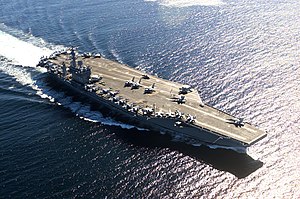
The Nimitz-class carriers are the largest and most powerful aircraft carriers in the world. They are nuclear-powered and can carry up to 85 aircraft. The Ford-class carriers are the newest class of aircraft carriers in the U.S. Navy. They are also nuclear-powered and can carry up to 90 aircraft.
The U.S. Navy's aircraft carriers are a vital part of its military power. They can project power around the world and are used to support a variety of missions, including combat operations, humanitarian assistance, and disaster relief.
There are 23 aircraft carrier museum ships around the world, 11 of which are located in the United States.
The Boeing 747-400: A Legendary Giant of the Skies
The Boeing 747-400 is a widely recognized and iconic
aircraft in the aviation industry. It is a variant of the Boeing 747 family and
has been a popular choice for long-haul flights due to its range, passenger
capacity, and cargo capabilities. Here are some potential blog topics you can
explore related to the Boeing 747-400:
 |
| boeing 747-400 |
The number of seats in a Boeing 747-400 varies depending on the airline and the configuration of the aircraft. However, a typical 747-400 has a capacity of around 590 passengers. This includes 416 economy class seats, 162 business class seats, and 12 first class seats.
- 1. "The Evolution of Boeing 747-400: From Concept to Reality" - Explore the history and development of the Boeing 747-400, including its design features and technological advancements.
- 2. "Flying High: The Incredible Performance of Boeing 747-400" - Discuss the aircraft's impressive range, speed, and fuel efficiency that have made it a preferred choice for airlines around the world.
- 3. "Inside the Queen of the Skies: Boeing 747-400 Cabin Tour" - Offer readers a virtual tour of the passenger cabin, highlighting the various seating configurations, amenities, and in-flight entertainment.
- 4. "Cargo Giants: How Boeing 747-400 Revolutionized Air Freight" - Explore the vital role the 747-400 has played in transporting goods and how it has transformed the air freight industry.
- 5. "Legendary Jumbo Jet: Memorable Moments of Boeing 747-400" - Compile a list of historic events and notable flights involving the Boeing 747-400, including unique stories and achievements.
- 6. "The Last of Its Kind: Farewell to Boeing 747-400" - Discuss the aircraft's retirement from major airline fleets and its legacy as one of the most iconic commercial airplanes.
- 7. "Behind the Scenes: Building the Boeing 747-400" - Delve into the manufacturing process, assembly, and engineering challenges involved in creating this remarkable aircraft.
- 8. "Flying Safely: The Boeing 747-400 and Aviation Safety" - Examine the safety features and advancements that have contributed to the aircraft's excellent safety record.
- 9. "The Future of Jumbo Jets: What's Next After the Boeing 747-400?" - Discuss the shift in the aviation industry toward newer, more fuel-efficient aircraft and what the future holds for large-capacity planes.
- 10. "Flying Nostalgia: My First Flight on a Boeing 747-400" - Share personal experiences or invite guest writers to recount their memorable journeys on this iconic aircraft.
The Boeing 747-400 is a popular and iconic wide-body commercial aircraft produced by Boeing. It is an improved and more advanced version of the original Boeing 747 series, known for its distinctive "hump" on the upper deck. British Airways, a prominent British airline, was one of the major operators of the Boeing 747-400.
The Boeing 747-400 is capable of carrying a large number of passengers and has an extended range, making it suitable for long-haul flights. It became a workhorse for many airlines around the world due to its efficiency and versatility.
 |
| boeing 747-400 seats |
Comparing the Boeing 747 and Boeing 747-400: Key Differences and Evolution in Commercial Aviation
The Boeing 747 and the Boeing 747-400 are both large commercial airliners, but there are some key differences between the two models.
The 747 was first introduced in 1969, and it was the first wide-body airliner ever built. The 747-400 was introduced in 1989, and it is an improved version of the 747.
Here is a table of the key differences between the 747 and the 747-400:
| Characteristic | Boeing 747 | Boeing 747-400 |
|---|---|---|
| Wingspan | 195 feet | 213 feet |
| Fuselage length | 231 feet | 243 feet |
| Height | 63 feet | 63 feet |
| Maximum takeoff weight | 705,000 pounds | 910,000 pounds |
| Maximum range | 6,600 nautical miles | 7,600 nautical miles |
| Engines | 4 × Pratt & Whitney JT9D-7R4 | 4 × General Electric GEnx-2B67 |
| Seating capacity | 416–524 | 416–600 |
Top 5 benefits of this 747-400
Certainly! The Boeing 747-400 offers several benefits that have made it a popular and iconic aircraft in the aviation industry. Here are five key benefits of the 747-400:
- Long-Haul Capability: The Boeing 747-400 is designed for long-haul flights, making it ideal for international routes and intercontinental travel. With its extended range of approximately 7,600 nautical miles, it can efficiently connect distant cities and continents without the need for layovers or refueling stops.
- High Passenger Capacity: The 747-400's spacious interior allows it to accommodate a large number of passengers. Depending on the airline's configuration, it can seat anywhere from around 416 to 600 passengers. This high seating capacity makes it a cost-effective choice for airlines, allowing them to carry more passengers per flight.
- Cargo and Freight Flexibility: In addition to carrying passengers, the Boeing 747-400 has ample cargo space, which has been crucial in revolutionizing air freight transportation. The aircraft's ability to transport large volumes of cargo, including oversized and heavy items, has made it a preferred choice for carrying both passengers and freight on the same flight.
- Versatility for Airlines: The 747-400's versatility lies in its ability to serve various routes and markets. Airlines can configure the cabin to offer different classes of service, making it suitable for business travelers, leisure passengers, and premium customers. Its adaptability allows airlines to cater to different passenger demands and tailor their services accordingly.
- Proven Reliability: The Boeing 747 series, including the 747-400, has a long history of safe and reliable operations. It has undergone rigorous testing, improvements, and updates over the years, resulting in a well-established safety record. This reliability has built trust among airlines and passengers, making it a popular choice for long-haul travel.
- Overall, the Boeing 747-400's combination of long-range capability, high passenger capacity, cargo flexibility, versatility, and proven reliability has solidified its position as a beloved and iconic aircraft in the aviation world.